Meg Leja writes…
My love is like a red, red rose – no, unfortunately, I am not going to be presenting a love potion in our February “manuscript of the month.” I will, however, be offering up a manuscript that deals with the literary device in this Valentine’s declaration (original to the poet Robert Burns). That’s right, February’s post is all about the interesting potentials for metaphor in early medieval medical compilations.
Our manuscript is Vatican, BAV Pal. lat. 973, a medium-sized codex of 131 folios. According to Bernhard Bischoff, it was produced in the vicinity of the city of Reims, one of the most important episcopal seats in the early Middle Ages, sometime in the second half of the ninth century.[1] The codex became part of the Bibliotheca Palatina in Heidelberg and was transferred to the Vatican in the seventeenth century.[2]
You can find the online manuscript as part of the wonderful Lorsch digital library online, together with an extensive description composed by Michael Kautz. Skimming over the table of contents in this description immediately alerts us to the fact that this is a miscellany, a mish-mash of different types of texts. Miscellanies point toward a conviction in the importance of assembling a diverse array of knowledge rather than sticking with a single thematic agenda. Our manuscript includes texts on penance, cosmography, the Eucharist, fasting, and matrimony, lots of Biblical exegesis and moral texts on virtues and vices. There are distinct signs that the codex may have been put together for use by a bishop. Among its contents, we find a ritual for a bishop’s ordination and prayers for receiving a tonsure, as well as sermons, council records, and pseudonymous epistles addressed to various earlier bishops. Finally, within this diverse mixture, there are three medically oriented texts.
First, we have a lunary that has been inserted (bottom of fol. 4v) a few decades after the manuscript was written. As Carine outlined a few months ago, lunaries offer different outcomes on specific issues according to the day of the lunar cycle in which an event occurs. This particular text lists good and bad days of the month (and sometimes also hours of the day) for bloodletting. The addition makes sense in being added to the end of a chronicle, since both texts are related to time. What is stranger is that the lunary includes only day 22 to day 30 of the lunar cycle (and no folios before or after contain the remaining days).
Second of our medical writings is two recipes for treating stones (fol. 128v). Like the lunary, these were added in a different hand (though perhaps not as late) at the end of another text. They offer the reader two different herbal droughts for treating kidney or bladder stones.
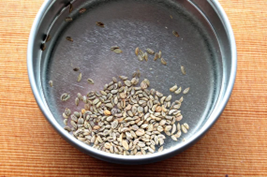
Third and finally, we have our “feature” text – selections from a dietary work known as the Diaeta Theodori (fols. 18r–19v), though this manuscript does not mention the name “Theodorus” anywhere.[3] The text promises to enable the reader to rule the health of the body by knowing how to seek out healthful foods and avoid substances that might be contrary to well-being. After a brief preface, it lists various food groups—grains, wheat, milk, legumes, beans, and meats—and under these subheadings, it offers information about the effects of specific types of these foods on the digestion. Lentils, for example, “move the stomach by making wind but do less for the health of the bowels,” while “bread made from barley restricts [constipates] and cools…[and] warm bread dries one out.” The treatise functions equally as a preventative regimen and as a set of remedies for gastrointestinal complaints.
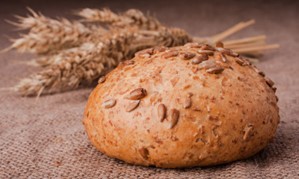
What is remarkable, then, is that the text that follows, although not a medical text, directly builds on this theme of therapeutics. Here we find a very short excerpt from Julian Pomerius’s On the Contemplative Life, a spiritual manual for bishops written around 500 CE.[4] The selection chosen is an extended explanation of how sins are like internal, concealed wounds; such wounds must be exposed and treated by an appropriate remedy or they will certainly fester and prove fatal. Like a physician, a priest must first reveal the wounds of sin, then apply the medicine of patience to heal, next the cautery of reproof if that fails to work, and finally the surgery of excommunication.
What stands out in the case of this manuscript is not the mere inclusion of medicine but its codicological context. The text that precedes the dietary treatise is a letter attributed to Pope Hormisdas and it also uses medical metaphors that compare the priest/confessor to a doctor/medicus. Thus, both before and after the medical recommendations on diet, we have texts that focus, not on the content of medical advice itself, but on the giving of advice as a model for spiritual caretaking. Why did the scribe who composed Pal. lat. 973 include this treatise? Perhaps for the reason that a bishop might use the information both to take care of the bodies of his flock and to reflect on the nature of episcopal responsibility and the way in which the healing of souls could effectively imitate said care for the body.
[1] Bernhard Bischoff, Katalog der festländlischen Handschriften des neunten Jahrhunderts (mit Ausnahme der wisigotischen) (Harrasowitz, 2014), # 6573.
[2] Because of one of the texts in the manuscript – the Cosmographia Iulii Caesaris – appears in a book catalogue from Lorsch, there was some suggestion that the manuscript was produced there, but this is no longer supported.
[3] An edition of this text was produced from three later manuscripts (not including our manuscript here) by Karl Sudhoff, “Diaeta Theodori,” Archiv für Geschichte der Medizin 8 (1915): 377–403.
[4] See Book Two, chapter 7 of Julianus Pomerius, The Contemplative Life, trans. Sister Mary Josephine Suelzer (Newman Press, 1947).